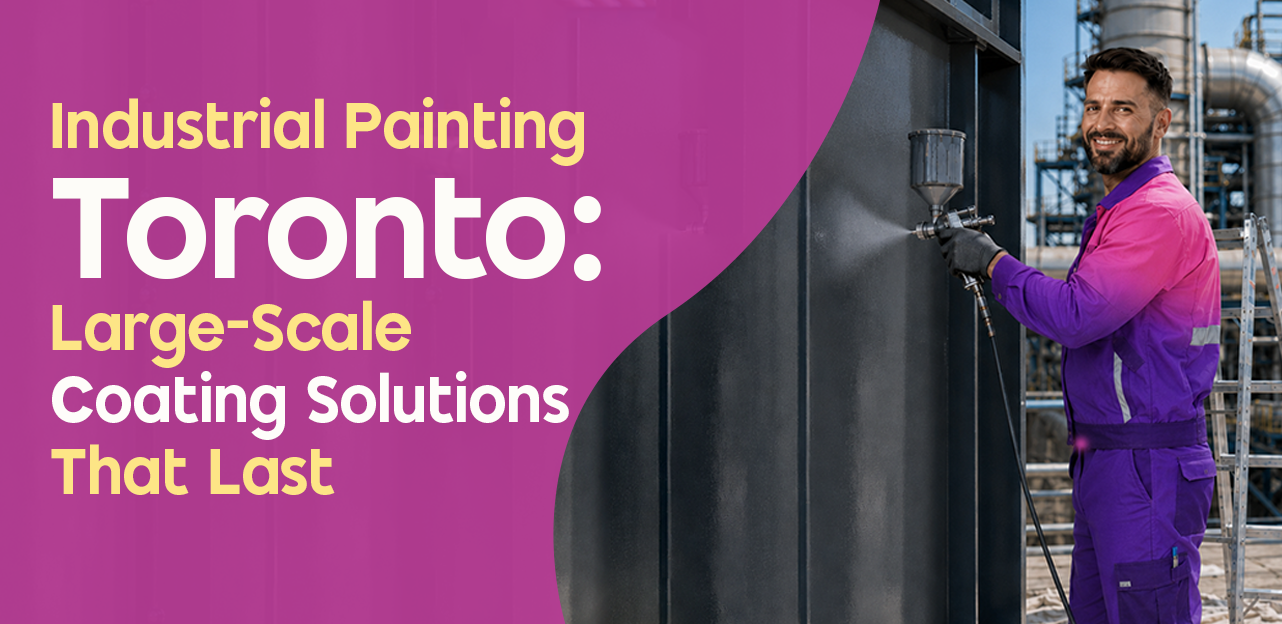
Industrial painting is a different world from painting a house or even an office. We’re talking factories, plants, warehouses, structural steel, tanks, and machinery, the kind of surfaces that face heat, chemicals, moisture, and constant wear every single day. On those, paint isn’t about looks. It’s protection, and when it fails, it gets expensive fast.
So this is a straight look at what industrial painting in Toronto actually involves, why the coatings and the prep matter so much, and how to get large-scale work done without shutting your operation down for weeks.
What’s the difference between industrial and commercial painting?
Commercial painting is mostly about how a space looks. Offices, shops, that sort of thing. Industrial painting is about protecting the surface underneath. The finish still has to look clean, but its real job is keeping steel, concrete, and equipment from breaking down.
That changes everything about the work. The coatings are heavy-duty protective systems, not regular paint. The prep is far more involved. And the stakes are higher, because a coating that fails on a piece of structural steel or a storage tank isn’t a cosmetic problem. It’s a maintenance bill, or worse, a safety issue. Protecting the surface underneath is what industrial painting in Toronto is really about.
Why do industrial coatings matter so much?
Because they’re the main thing standing between your equipment and everything that wants to destroy it.
Steel rusts. Concrete cracks and soaks things up. Machinery wears down. Industrial coatings are built to hold all of that off, corrosion, chemicals, heat, abrasion, moisture, whatever the environment throws at the surface. A good coating system can add years to the life of a structure or a piece of equipment. Skip it, or use the wrong thing, and you’re looking at rust, breakdown, and repairs that cost far more than the coating ever would have. That’s the whole point of it: protect the asset now, avoid the bigger bill later.
Why is surface prep such a big deal?
Because a coating is only as good as what’s under it. Skip the prep and even the best product peels off inside a year. In industrial jobs, prep means a lot more than quick sand. Old coatings and rust have to come off, often with abrasive blasting, so the new coating bonds to clean, sound metal or concrete. Surfaces get cleaned, degreased, and profiled properly before anything’s applied. It’s slow, unglamorous work, and it’s the single biggest reason an industrial coating lasts fifteen years instead of two. Any painter who rushes this part is quietly setting the whole job up to fail.
What kinds of industrial coatings are there?
Quite a few, and the right one depends entirely on what the surface has to deal with. Some of the common ones:
- Epoxy coatings, tough and chemical-resistant, are common on floors, tanks, and equipment
- Polyurethane coatings, hard-wearing and UV-stable, are often used as a topcoat
- Zinc-rich primers, built to fight corrosion on structural steel
- Intumescent coatings, which help protect steel in a fire
- Floor coating systems for plants and warehouses that take heavy traffic
Matching the coating to the conditions is half the job. The wrong product in the wrong place fails no matter how carefully it goes on, so a good industrial painter works out the environment first, then picks the system.
How do you do this without shutting the plant down?
You plan around the operation. Most facilities can’t just stop, so the work gets scheduled around planned shutdowns, slower stretches, weekends, or done zone by zone while the rest keeps running.
On a live site there’s more to it than paint. Containment to keep blasting and overspray under control, safety measures for your people and the crew, and coordination so the work stays out of production’s way. A crew that’s done industrial work before knows how to slot into a working plant without becoming a headache. That planning is a real part of what industrial painting in Toronto involves, because on a big site, keeping things running safely matters as much as the coating itself.
What about safety and compliance?
It’s not optional on an industrial site, and a proper contractor treats it that way from the start.
This kind of work comes with real hazards. Blasting, working at height, confined spaces, chemicals, and heavy equipment moving nearby. The crew needs to be trained, insured, WSIB-covered, and set up to work safely around your operation and your staff. Good contractors handle containment and disposal properly too, so dust and old coating material don’t end up where they shouldn’t. It protects your people, their crew, and you.
How much does industrial painting cost in Toronto?
There’s no flat rate. It depends heavily on the surface, its condition, the coating system, and how much prep is needed. A painter who quotes without inspecting the site is guessing.
The bigger thing is how you think about the cost. An industrial coating isn’t really an expense; it’s protection for a much more valuable asset. Spending properly on prep and the right system now saves you from corrosion, downtime, and replacement bills later. The cheapest quote that cuts corners on prep or uses the wrong product almost always turns into the most expensive option once it fails early. The main thing with industrial painting in Toronto is to compare what’s actually included, not just the number at the bottom.
What surfaces and structures can be coated?
Pretty much any industrial surface that needs protecting. The common ones include:
- Structural steel, beams, columns, and framework
- Storage tanks, silos, and vessels
- Machinery and equipment
- Pipes, ductwork, and railings
- Concrete floors, walls, and containment areas
- Mezzanines, platforms, and walkways
Each of these behaves differently. Steel, concrete, and equipment all need their own prep and their own coating approach, which is exactly why a proper site assessment comes before any quote.
How long should an industrial coating last?
Done properly, for a long time. Often ten to twenty years or more, depending on the system and the conditions it has to face.
The two things that decide it are prep and product. A coating applied over clean, well-prepped steel with the right system for the environment can protect a structure for well over a decade. The same coating slapped onto rusty, poorly prepped metal might start failing within a couple of years. That gap is the whole reason the boring parts, the blasting, the priming, the right product choice matter as much as they do. You’re not just buying paint, you’re buying how long the protection actually holds.
What if there’s already rust or old coating?
That’s normal, and a good contractor deals with it instead of painting over it. Coating over rust or a failing old finish just traps the problem and buys you a few months at best.
The rust and loose material come off first, usually by blasting, back to sound metal. Any real damage gets flagged, so you can decide how to handle it before the new system goes on. It takes longer, and it isn’t the cheapest route, but it’s the only one that lasts. Painting over a problem so you can’t see it anymore doesn’t make it go away.
How do you choose an industrial painting contractor?
Look for the things that show they can genuinely handle large-scale protective work:
- Real experience with industrial coatings and big jobs, not just houses
- Proper surface prep capability, including abrasive blasting
- Licensed, insured, and WSIB-covered, with a strong safety record
- Knows how to match the right coating system to your conditions
- Set up for containment, height work, and working around live operations
- A clear written scope with prep, products, and timeline spelled out
This isn’t work you hand to just anyone with a sprayer. Experience and safety count for as much as the finish itself.
The bottom line
Industrial coatings do a quiet, unglamorous job, holding off the rust, wear, and damage that would otherwise eat into your equipment and structures. Done right, with proper prep and the right system, they last for years and save you far more than they ever cost. Done cheaply, they fail early and take your budget with them.
If you’ve got a plant, warehouse, or industrial facility that needs protecting, professional industrial painting in Toronto, planned around your operation and built to last, is worth getting right the first time. It’s protection for assets you can’t really afford to let go.
FAQs
Q: Do you handle surface prep and sandblasting?
A: Yes, and on industrial jobs, it’s the most important part of all. Old coatings and rust usually have to come off with abrasive blasting so the new coating bonds to clean, sound metal or concrete. Skipping proper prep is the number one reason industrial coatings fail early.
Q: Can you coat structural steel, tanks, and machinery?
A: We can. Structural steel, storage tanks, machinery, pipes, railings, concrete floors, and most industrial surfaces can be coated with the right system. Each material needs its own prep and product, so we assess the surface and the conditions before recommending anything.
Q: How long do industrial coatings last?
A: Done properly, often ten to twenty years or more, depending on the system and what it’s exposed to. The two things that decide it are prep and product. A good system over well-prepped steel protects for well over a decade, while a rushed one can start failing within a couple of years.
Q: Do you provide containment for blasting and overspray?
A: Yes. On a live site, containment keeps dust, blasting media, and overspray under control so they don’t spread into your operation or the environment. Proper containment and disposal are just part of doing industrial work safely and responsibly.
Q: Can you work around our production schedule?
A: We plan the work around your operation, whether that means a scheduled shutdown, slower periods, weekends, or going zone by zone. Most facilities can’t simply stop, so fitting into your schedule safely is a core part of how we approach these jobs.